Reading shouldn’t require a budget. Between public domain archives, library apps, and legitimate discount platforms, there are more ways to find free or cheap books today than at any point in publishing history. You just need to know where to look and which tools actually work.
Start with Your Library (Seriously)
The single most underused resource for free ebooks and audiobooks is a library card. Most public libraries in the US, UK, Canada, and Australia offer access to OverDrive (now rebranded as Libby) and Hoopla, both of which let you borrow digital titles from your phone with no late fees and no physical returns.
Libby has waitlists for popular titles, but Hoopla offers instant access to a rotating catalog, typically 10–15 borrows per month. The selection skews toward indie and backlist titles, but it’s genuinely useful for readers who go through books quickly.
If your local library participates, you can also access Kanopy for documentaries and some audiobooks, and many libraries offer RBdigital (now Libby-integrated) for magazines.
Setting this up takes about five minutes: download the Libby app, add your library card number, and start browsing. Many people never do this despite having a library card in their wallet.
Project Gutenberg and the Public Domain
Project Gutenberg hosts over 70,000 books that have entered the public domain — meaning the copyright has expired. In the US, works published before 1928 are generally fair game. This includes most of the Western literary canon: Dickens, Tolstoy, Austen, Twain, Hemingway’s early work, the complete Sherlock Holmes stories, and thousands of others.
The site itself looks dated, but the content is substantial. Downloads are available in EPUB, MOBI, and plain text. The EPUB format works on Kindle (via email or USB), Kobo, and most reading apps.
A few things worth knowing about public domain books:
- Formatting varies significantly. Some are beautifully typeset; others are bare plain text.
- Standard Ebooks (standardebooks.org) produces polished, carefully formatted editions of public domain titles. If you’re going to read Frankenstein or The Count of Monte Cristo on an e-reader, the Standard Ebooks version is noticeably better than the raw Gutenberg file.
- The Internet Archive’s Open Library (archive.org/details/openlibrary) includes both public domain titles and a controlled digital lending program for newer books, though the latter has faced legal challenges in recent years.
Amazon’s Kindle Ecosystem: Free and Discounted Titles
Amazon offers hundreds of free Kindle ebooks at any given time. The catch is that most are either public domain reprints or independently published titles using free pricing as a promotional strategy. The quality varies enormously.
The genuinely useful sources within Amazon’s ecosystem:
Kindle Unlimited ($11.99/month in the US) gives unlimited access to over a million titles. It’s not the right choice for every reader — the catalog is heavy on romance, thrillers, and self-published fiction — but if those genres appeal to you, it’s worth the math. At $12/month, you’d need to read more than two or three paid titles per month to break even.
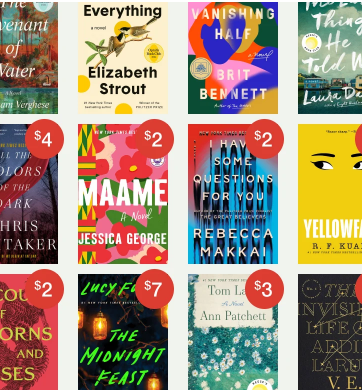
BookBub (bookbub.com) deserves special mention. It aggregates daily deals from Amazon, Apple Books, Kobo, Barnes & Noble, and others, sending email alerts when books in your preferred genres drop to $1.99 or are free. Many traditionally published books from major publishers cycle through these deals. Signing up is free, and the deals are legitimate. A lot of serious readers quietly use this as their primary discovery tool.
Chirp (the audiobook arm of BookBub) does the same for audiobooks, a category where prices are normally steep.
Other Platforms Worth Knowing
Open Library via the Internet Archive lets you borrow ebooks using a “controlled digital lending” model, one digital copy per physical copy owned. The legality is contested (a 2024 court ruling went against the Archive on some points), but it continues to operate, and the catalog is large.
ManyBooks (manybooks.net) curates public domain titles and some indie releases with a cleaner interface than Project Gutenberg. Good for browsing if you’re not sure what you want.
Smashwords (now merged with Draft2Digital) offers DRM-free ebooks from indie authors, often at low prices or free. The catalog is massive but uneven — you’ll need to look at reviews.
Google Play Books regularly discounts titles, and the price often differs from Amazon’s for the same book. Worth a quick comparison before you buy.
WorldCat (worldcat.org) isn’t a reading platform — it’s a catalog of library collections worldwide. If you’re looking for an obscure title, this tells you which libraries own it, including digital copies accessible via interlibrary loan.
Audiobooks Without Audible
Audiobooks are expensive. Audible’s standard price for a single title runs $15–$25, and the subscription model is structured in ways that make it hard to accumulate credits without losing them.
Alternatives worth exploring:
Librivox (librivox.org) offers public domain audiobooks recorded by volunteers. Quality is inconsistent — some recordings are excellent, others are rough — but for classics like Pride and Prejudice or The Iliad, it’s a legitimate option.
Libro.fm supports independent bookstores and prices similarly to Audible, but with a more transparent model and no expiring credits.
Your library via Libby often includes audiobooks, and this is genuinely the best free option for newer titles. Waitlists exist for popular books, but availability has improved significantly as library budgets for digital lending have grown.
A Note on “Free” PDFs and Gray Areas
Search engines surface a lot of results for free book PDFs hosted on third-party sites. Most of these are unauthorized copies of copyrighted works. Beyond the obvious ethical issue, these downloads sometimes come with malware, and they don’t help the authors whose work you’re presumably interested in reading.
The platforms listed above are all legal. Some involve gray areas (like Internet Archive’s digital lending model), but none require downloading from sketchy sources.
Comparing Your Options
| Situation | Best Option |
|---|---|
| Classic literature, public domain | Standard Ebooks, Project Gutenberg |
| New releases, major publishers | Libby (library app) |
| Genre fiction (romance, thrillers) | Kindle Unlimited |
| Daily deals on current titles | BookBub |
| Free audiobooks | Libby, Librivox |
| DRM-free indie ebooks | Smashwords / Draft2Digital |
The Most Practical Setup for Most Readers
If you read frequently and want to save money, create a Libby account linked to your library card, sign up for BookBub alerts in your favorite genres, and bookmark Standard Ebooks for classics. That combination is absolutely free, and it meets the majority of reading demands.
If you read more than 3-4 novels each month, Kindle Unlimited makes economic sense, especially if you read genre fiction.