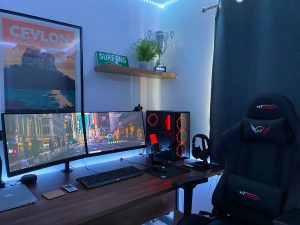
You finally get 45 minutes of alone time. The children are sleeping, the household tasks are done, or you’ve just finished a long workday. You settle in, open your gaming library (or the PlayStation Store, Steam, or App Store), and suddenly, an overwhelming surge of stress washes over you.
“Should I keep playing that 100-hour RPG?”
“If I start a competitive shooter, will I have enough time to complete the match?”
“I might try that new indie game, but what if the tutorial lasts an hour?”
By the time you make a decision, your free time has already disappeared.
You find yourself scrolling through your phone or simply watching someone else play on YouTube.
If this sounds familiar, you’re suffering from a modern problem: choice paralysis combined with time scarcity.
The issue isn’t a lack of quality games; it’s having too many, and your schedule doesn’t allow for experimentation. You need a method. You must know how to pick the right game when time is limited, so you can actually play instead of just browsing.
Why “Choosing the Game” Is Harder Than Playing It?
The gaming industry has changed dramatically in the last decade.
According to an NPD report from 2014, about 74 percent of US gamers preferred physical copies of games, suggesting that many players during that time likely owned collections of physical games.
Nowadays, with services such as Xbox Game Pass, PlayStation Plus, and large digital discounts, the typical gamer can instantly access hundreds of titles.
This wealth of options is both beneficial and challenging.
The Paradox of Choice
Psychologist Barry Schwartz introduced the concept of “The Paradox of Choice,” which suggests that although having some options is beneficial, an excess of choices can cause anxiety, indecision, and dissatisfaction.
When time is limited, you experience significant pressure to select the ideal game because you want to avoid “wasting” your valuable hour on a poor experience.
The Commitment Fear
Another factor is the fear of commitment. Beginning a new game resembles signing a contract. If you choose The Witcher 3 or Baldur’s Gate 3, you aren’t merely selecting a game; you’re choosing a lifestyle for the upcoming three months.
According to Kaiser Permanente, gaming itself is not necessarily a problem based on the number of hours played, but it may become concerning if it starts to interfere with your daily life. If you only have 30 minutes each day, it can feel overwhelming and make it harder to start a session.
To address this, it may help to reconsider how you approach choosing games rather than focusing solely on finding the “best” one. What is the best game for my current situation?”
Step 1: Define Your Available Time (The Golden Rule)
The most important step in choosing the right game when time is limited is to be honest about your available session length. Research by Jeslin Elsa Jose and Sampreeti Das shows gamers often overestimate their play time and lose track due to poor time management, leading to shorter, less productive sessions.
To help with this, players can organize gaming into three categories:
- The Quickie (15 to 30 minutes) is for short breaks like lunch, before a meeting, or while waiting for dinner.
- The Standard (45–90 minutes): An evening after work or a weekend morning.
- The Deep Dive (2+ hours): Rarely, such as a Saturday with no plans or a holiday break.
You need to match the game to its category. Playing a story-rich JRPG in 20-minute sessions is like trying to read War and Peace on a rollercoaster. You will get frustrated and lose track of the story.
Step 2: Understand Game Genres by “Respect for Time”
Not all genres are the same. Some are designed for short sessions, while others are meant for long, immersive gameplay.
Below is an overview of how various genres generally handle time limitations.
Low-Commitment Genres (Best for “The Quickie”)
These titles focus on high replay value, brief gameplay loops, or rapid matchmaking.
- Roguelikes/Roguelites: Hades, Dead Cells, The Binding of Isaac.
Why: A single run usually lasts 20 to 45 minutes. If you die, you start over. There is no worry about saving mid-mission. You can finish a run, feel accomplished, and stop playing.
- Arcade Racers: Forza Horizon, Hot Wheels Unleashed.
Why: Races last 2 to 10 minutes. You can finish several races, adjust a car, and log off without losing the story context.
- Fighting Games: Street Fighter 6, Super Smash Bros.
Why: Matches last 3–5 minutes. Perfect for quick bursts of adrenaline.
- Puzzle/Strategy (Turn-Based): Into the Breach, Slay the Spire.
Why: These games are turn-based. You can take a turn, put the console to sleep, and come back hours later without penalty.
Medium-Commitment Genres (Best for “The Standard”)
These require a bit more focus but have natural stopping points.
- Open-World Action (with manual saves): Spider-Man, Ghost of Tsushima.
Why: These can be time-consuming, but they are organized into missions. You can decide, “I’ll complete two side missions or one story mission,” which usually fits a 45–90 minute session.
- Extraction Shooters / Battle Royale: Apex Legends, Hunt: Showdown.
Why: Matches last 15–30 minutes. The risk is higher since you can’t pause, but the time frame is predictable.
- Level-Based Platformers: Astro Bot, Mario Wonder.
Why: Each level is a self-Why: Each level is a self-contained chunk. Finish a level, save, and quit.
High-Commitment Genres (Only for “The Deep Dive”)
Avoid these unless you have a guaranteed 2+ hour window, or you risk feeling like you made no progress at all.
- 4X Strategy: Civilization, Stellaris.
Why: “One more turn” syndrome is real. These games are time vacuums.
- MMORPGs: Final Fantasy XIV, World of Warcraft.
Why: Logging in, traveling to the raid, and waiting for group members often takes 30 minutes before you even start the activity.
- Hardcore RPGs: Baldur’s Gate 3, Persona 5.
Why: These often have long cutscenes, complex inventory management, and save restrictions that make short sessions frustrating.
Step 3: The “3-Question” Decision System
To find the best game to play with limited time, stop browsing the store and ask yourself three targeted questions. This takes just 10 seconds.
1. How much mental energy do I have left?
High Energy: I seek a challenge. I am prepared to learn mechanics and respond swiftly.
Pick: Competitive shooters, Souls-like games, complex strategy.
Low Energy: My mind is exhausted. I want comfort food.
Pick: Farming sims (Stardew Valley), open-world exploration (simply riding around in Red Dead Redemption 2), or a casual puzzle game.
2. Am I willing to learn new controls?
Yes: I’m prepared for a new experience and have patience for tutorials.
Pick: A new game you recently bought or downloaded.
No: I prefer muscle memory and don’t want to think about which button does what. Choose: A game you have already played. A “comfort game.” Skyrim, Rocket League, or Minecraft.
3. What is the “exit strategy”?
- Can I save anywhere?
- Does this game have auto-save checkpoints?
- Am I waiting for a friend to get online, or am I playing solo?
Example Scenario: You have 50 minutes. You are tired after work (Low Energy). You don’t want to learn a new game (No).
Bad Choice: Buying Elden Ring for the first time. You’ll die quickly, get frustrated, and waste 20 minutes watching a YouTube guide on leveling up.
Good Choice: Loading up Dave the Diver or PowerWash Simulator. You know the controls, the gameplay is relaxing, and you can save anytime.
Real-Life Examples: Putting It Into Practice
Let’s look at two hypothetical gamers to see this system in action.
The Casual Parent
Profile: Sarah has two kids under 5. She plays on a Nintendo Switch.
Time: 20–30 minutes, usually during nap time or after bedtime.
The Old Way: Sarah would open the eShop, look at the “Great Deals” section, buy an indie game, play the tutorial for 20 minutes, never touch it again because she forgot the story, and feel like she wasted money.
The New Way: Sarah uses the “Low Mental Energy” + “Instant Action” rule. She avoids narrative-heavy RPGs.
Instead, she keeps a rotation of three games:
- Vampire Survivors (Roguelike): Each run has a soft time limit of 15, 20, or 30 minutes, depending on the stage, according to the game’s official information.
- Mario Kart 8 (Racer): She can complete a Grand Prix (4 races) in 20 minutes.
- Animal Crossing (Sim): According to Games Learning Society, casual Animal Crossing players typically spend around 5 to 10 hours per week on daily activities like chores and fishing, so a session may vary but can include logging in, completing daily tasks, fishing for about 10 minutes, and then putting the Switch to sleep.
Result: Sarah now plays 4–5 times a week because she no longer spends her limited time figuring out what to play.
The Busy Professional
According to Game Informer, more than 34 million Americans spend an average of 22 hours per week playing video games. In comparison, Mark fits in 90 minutes of PS5 gaming on three nights each week while working 50 hours a week. One weekend day, if lucky.
The Old Way: Mark would dive into sprawling AAA titles like Assassin’s Creed Valhalla, which offers a vast amount of content according to GamesRadar+, and often spend 30 minutes just fast-traveling and figuring out his progress. After an hour, he felt he had done nothing since the main quest barely moved forward.
The New Way: Mark uses the “Session Goals” method. Instead of treating games like a marathon, he treats them like a TV series.
According to data from PS-Timetracker, he plays God of War Ragnarök, telling himself, “Tonight, I am doing only the main story quest. No side quests. I will stop when the chapter ends.” Despite this resolve, he is part of the small group of users, with God of War Ragnarök accounting for just 0.4 percent of tracked playtime. He also makes frequent use of Rest Mode.
Instead of closing the game, he puts the PS5 in Rest Mode right at a save point.
According to a report from TheGamer, Mark now finishes 6–8 AAA games a year, a pace that sets him apart from the many U.S. gamers who typically buy fewer than four new titles annually, and is a big improvement from when he would get stuck in the middle of games for months and forget the controls.
High-Value vs. Low-Value Approaches
| Factor | Low-Value Approach (Leads to Burnout) | High-Value Approach (Leads to Enjoyment) |
|---|---|---|
| Mindset | “I need to play the best game right now.” | “I need to play the right game for my mood.” |
| Library | Scrolls through 300+ Game Pass titles for 40 mins. | Has a curated “Short List” of 3-5 current games. |
| Game Choice | Starts a complex, story-heavy RPG with 20 mins left. | Plays a Roguelike or comfort game for quick satisfaction. |
| Saving | Relies on auto-save only; loses progress if interrupted. | Uses Rest Mode or manual saves to secure progress. |
| Progress | Tries to 100% everything; feels overwhelmed. | Focuses on the main story or specific goals; feels accomplished. |
Common Mistakes People Make (And How to Avoid Them)
Even if you have a solid routine, it’s easy to slip into bad habits. Here are some common mistakes gamers make when they’re short on time.
1. The “I’ll Just Try It” Trap
Imagine you have 30 minutes to play. You start a new game that needs a 20-minute tutorial. By the time you finish, there are only 10 minutes left, and it feels like you barely played at all.
Solution: Don’t start new games when you only have a little time. Pick a specific day, like Saturday morning, just for trying out tutorials.
2. Subscription Overload
Services like Xbox Game Pass offer great value, but having hundreds of games to choose from can be overwhelming if you don’t have much time.
Solution: Hide your full library. Only keep three games downloaded at a time. Put the rest on a “Play Later” list and ignore them until you finish one of your current games.
3. Ignoring “Rest Mode” or “Quick Resume.”
On consoles like the PS5 and Xbox Series X, being able to pause your game and pick up right where you left off is a huge help for busy gamers. Still, a lot of people close their games completely.
Solution: If you’re playing a single-player game, leave it open and use your console’s sleep mode. When you turn it back on, you’ll be right where you left off in just a few seconds. This saves you from wasting time on loading screens.
4. Fear of Difficulty
When you don’t have much time, spending 45 minutes stuck on a boss isn’t a fun challenge—it just wastes a rare chance to play.
Solution: Don’t be too proud to lower the difficulty. Games are for fun. If you are playing Star Wars Jedi: Survivor and a boss is eating up your entire evening, switch to “Story Mode.” You’ll get past the obstacle and feel good about the progress you’ve made.
Building To get better at picking the right game when you’re short on time, try to avoid decision fatigue. Spend 30 minutes organizing now, and you’ll save hours in the future. Spend 30 minutes now to save hours later.
Make a folder or list on your console or PC called “Now Playing.” In it, keep three types of games:
1. The Long-Term Story Game: (e.g., Cyberpunk 2077).
When to play: When you have 1+ hours and high mental energy.
2. The Pick-Up-And-Play: (e.g., Rocket League, Hades).
When to play: When you have 15–30 minutes or low energy.
3. The Social Game: (e.g., Fortnite, Call of Duty).
When to play: When friends are online.
By sticking to just these three options, you avoid feeling overwhelmed by choices. Instead of wondering what to play, you simply pick the category that matches your mood.
Final Thoughts
Gaming should help you relax, not make you stressed. If your game backlog makes you anxious, you’re not the only one. Now you have some ways to make it better. it.
Learning how to choose the right game when you have limited time is less about the games themselves and more about managing your own expectations. It’s about understanding that a 30-minute session in a roguelike is just as valid as a 3-hour session in an MMO. It’s about respecting your time and choosing games that respect it back.