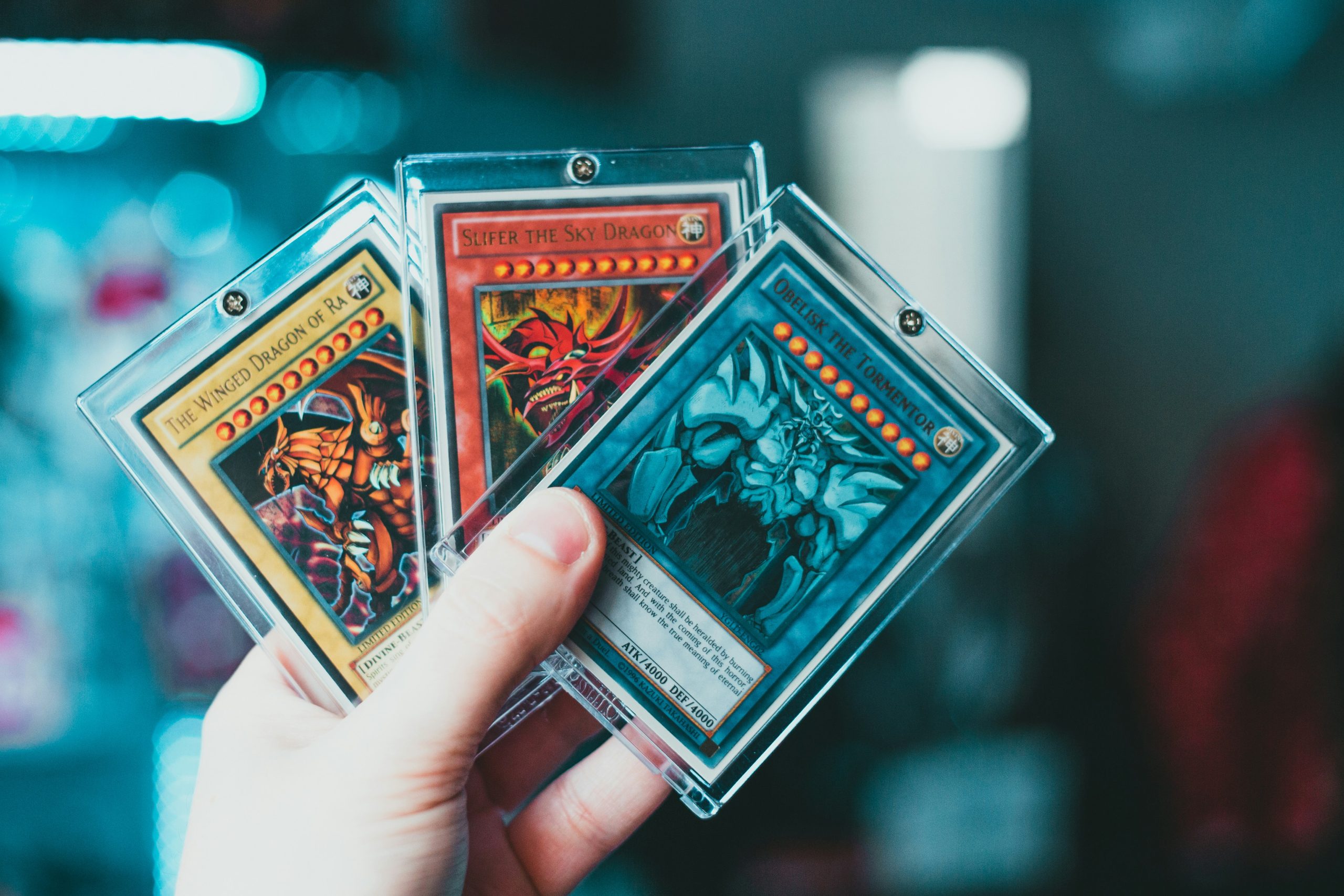
When you walk into a local game shop, the walls are lined with booster boxes, playmats, and binders full of rare cards.
But every experienced player started the same way: they bought a starting deck that was already put together, read the rules, and messed up their first few hands.
Finding your way around your first few purchases and learning basic tactics will save you a ton of time and money if you are new to CCGs.
The Anatomy of a Starter Deck
A starter deck (often called a “theme deck” or “structure deck”) is a pre-constructed, ready-to-play deck assembled by the manufacturer. They typically cost between $15 and $30.
For a beginner, they are non-negotiable. Building a deck from scratch out of random booster packs is a fast track to losing games, because a pile of random cards lacks a cohesive engine.
What You Actually Get?
When you buy a starter deck, you aren’t just getting cards. You are buying a guided tour of the game’s mechanics.
Most starter boxes include:
- A playable deck: Usually 40 to 60 cards, mathematically balanced with the correct ratio of resource cards (like Lands in MTG or Energy in Pokémon) to playable characters/spells.
- A foil “face” card: The primary character or monster the deck is built around.
- A quick-start rulebook: Essential for understanding turn phases.
- Tokens and trackers: Cardboard punch-outs for tracking damage, life totals, or status effects.
The “One-Of” Problem in Pre-Cons
Manufacturers design starter decks to showcase a game’s variety. Because of this, a starter deck might include twenty different cards, with only one or two copies of each.
From an experience standpoint, this introduces wild inconsistency. In most CCGs, you are allowed up to four copies of a specific card in your deck. Having single copies (called “one-ofs”) means you will rarely draw your best cards when you need them.
Practical Takeaway: A starter deck is brilliant for learning the rules, but its inherent inconsistency makes it weak in competitive play. Your first goal after learning to play is to upgrade this deck to be more consistent.
Identifying Your Deck’s Archetype
Before you can win, you have to know how your deck is supposed to win. Every deck falls into one of a few major strategy archetypes. Figuring out which one you are playing dictates every decision you make during a game.
Aggro (Aggressive)
Aggro decks are built for speed. They use cheap, low-cost units to overwhelm the opponent before they can set up their defenses.
- How it plays: You will play threats early and attack often. You ignore the opponent’s long-term strategy because you plan to end the game before it matters.
- The downside: If the opponent survives the early onslaught and plays a massive defensive character, aggro decks often “run out of gas” and lose.
Control
Control decks are the opposite of aggro. They want the game to go as long as possible.
- How it plays: You will spend the early game destroying your opponent’s characters, countering their spells, and drawing extra cards. Once the opponent has exhausted their resources, you play one massive, unbeatable threat to close out the game.
- The downside: Control decks require deep knowledge of the game. You have to know exactly which of the opponent’s cards are worth destroying and which you can safely ignore.
Midrange
Midrange sits perfectly between the two. It plays defensively against aggressive decks and aggressively against control decks.
- How it plays: These decks focus on high-value, efficient cards. They want a board full of strong, moderately priced characters that outclass the opponent’s smaller units.
- The downside: Midrange can sometimes draw the wrong half of its deck—pulling defensive cards when it needs to attack, or slow cards when it needs to defend.
| Archetype | Primary Goal | Game Length Preference | Key Weakness |
| Aggro | Deal damage as fast as possible. | Short games (Turns 1-5) | Large defensive blockers. |
| Control | Deny the opponent’s strategy. | Long games (Turns 10+) | Fast, overwhelming early attacks. |
| Midrange | Play highly efficient, flexible cards. | Medium games (Turns 5-9) | Can struggle against heavy control decks. |
Core Gameplay Fundamentals That Win Games
Once you know the rules and your deck’s archetype, you have to master the invisible mechanics of card games. Beginners focus on life totals; veterans focus on resources.
1. Card Advantage
In any CCG, the cards in your hand are your options. If you have five cards in hand and your opponent has one, you have massive card advantage. You are highly likely to win simply because you have more answers to their actions.
Beginners often make the mistake of playing cards just because they can, emptying their hand early. Always look for ways to draw extra cards or force your opponent to use two of their cards to deal with one of yours.
Real-world scenario: If you play a spell that destroys all creatures on the board (a “board wipe”), and you destroy three of your opponent’s creatures while losing none of your own, you just gained a massive card advantage.
2. Tempo (Momentum)
Tempo is the pace of the game. It is about board presence and resource efficiency.
If your opponent spends five resources to play a giant dragon, and you spend two resources to play a spell that destroys it, you have gained tempo. You answered their expensive threat with a cheap response, leaving you with three extra resources to play a threat of your own.
3. Life is a Resource, Not a Scoreboard
This is the hardest concept for new players to grasp. In games like Magic: The Gathering or Flesh and Blood, you start with a set amount of life.
Beginners often panic when they take damage. They will sacrifice an important, synergy-driving character to block 2 points of damage.
The truth: Winning with 1 life point is the same as winning with 20. Do not throw away valuable cards on the board to protect your life total early in the game. Save your life total to buy yourself time to set up your winning combination.
Upgrading Your Starter Deck (Without Wasting Money)
After a dozen games, you will notice which cards in your starter deck always seem to win you the game, and which cards sit dead in your hand. It is time to upgrade.
Here is where beginners make their most expensive mistake: buying booster packs to find upgrades.
The Booster Pack Trap
Booster packs are randomized. Buying $20 worth of booster packs might yield zero cards that fit your specific deck’s strategy. Opening packs is fun, but it is effectively gambling.
Buy Single Cards Instead
To upgrade efficiently, buy “singles” (individual cards purchased directly from a game store or an online marketplace). For the price of three random booster packs, you can often buy four copies of a highly competitive, perfectly synergistic card for your deck.
If you aren’t sure what to buy, look up tournament results or decklists on established database sites like MTGGoldfish (for Magic) or LimitlessTCG (for Pokémon). Look for “budget upgrades” for your specific starter deck.
The Upgrade Process
- Identify the dead weight: Remove the cards from your starter deck that cost too much to play or don’t contribute to your main win condition.
- Max out the best cards: If your deck relies on a specific low-cost creature to start your engine, increase your copy count of that creature to the maximum allowed (usually 3 or 4).
- Fix your resource curve: Ensure you have enough cheap cards to play in the early turns. A deck full of powerful, expensive cards will lose before it ever gets to play them.
For deeper dives into technical card ratios, refer to the official strategy articles published by Wizards of the Coast (or the equivalent manufacturer for your game), which extensively cover probability and deck building.
Protecting Your Investment
Cards degrade incredibly fast. Shuffling a deck with bare hands transfers skin oils and dirt to the card edges. Within a few weeks, the edges will whiten, the cards will warp, and they will lose any resale value.
Furthermore, damaged cards are considered “marked” in official tournament play. If your best card has a scuffed corner, you can technically identify it from the back of the deck, which is illegal in organized play.
Sleeve Your Deck Immediately
Before you shuffle your starter deck for the first time, put it in protective card sleeves.
- Penny Sleeves: Thin, clear plastic. Good for storing cheap cards in boxes, but terrible for playing. They stick together and shuffle poorly.
- Matte Deck Sleeves: (Brands like Dragon Shield or Ultra Pro Eclipse). These cost around $10–$13 for a pack of 100. They have a textured back that allows the deck to slide and shuffle like butter. This is a mandatory purchase for anyone playing a CCG.
You will also want a plastic “deck box” to transport your cards. Throwing a rubber band around your deck will instantly ruin the edges of your cards. A basic plastic deck box costs $3 and will save you hundreds of dollars in card damage over time.
Next Steps: Joining the Community
It’s good to play against the same friend at the kitchen table to learn, but the community is where a CCG really lives on.
Find “Local Game Stores” (LGS) near you. Most shops have nights set aside for certain games, like Wednesdays are for Pokémon, Thursdays are for Lorcana, and Fridays are for Magic.
Show up with a better starter deck without being afraid. Tell your opponent that you are new to the game. Most people who play CCGs are happy to see new people like the game, and experienced players will often give you their bulk common cards to help you build your collection.
Learn how the cards work together, ask questions when a card doesn’t make sense, and get good at the basics of speed and advantage.